Calgary’s Most Common Tree Diseases and How to Spot Them
Calgary’s climate brings cold winters, chinook winds, shifting precipitation and big temperature changes, which can be tough on our city’s trees. While these conditions help trees offer beauty, shade and environmental benefits, they also make trees more likely to get diseases that affect their health and lifespan.
This guide covers common tree diseases that could harm your property and explains what you can do to prevent them.
Why Tree Disease Identification Matters
Spotting tree diseases early can be the difference between saving a tree and needing to remove it. Many diseases move quickly after symptoms show up and by the time you notice clear signs, a lot of damage may already be done.
Diseased trees can also be a safety risk. As disease gets worse, trees become weaker and branches are more likely to break or the whole tree could fall, which is especially dangerous during Calgary’s windstorms and heavy snow. Some diseases can also spread to nearby healthy trees, affecting whole neighborhoods.
It costs much more to remove large diseased trees than to take care of problems early. Mature trees add value to your property, so losing them can hurt curb appeal, raise energy costs and lower property values.
Dutch Elm Disease: Calgary’s Most Serious Tree Threat
Dutch Elm Disease (DED) is Calgary’s most serious tree disease threat. It can kill mature elm trees in just one season. This fungus has wiped out many elms across North America, so Calgary has strong programs in place to protect our urban forest.
What Causes Dutch Elm Disease
A fungus spread mostly by elm bark beetles causes this disease. When these beetles feed on healthy trees, they bring in spores that block the tree’s water flow, so the tree dies from lack of water even if the soil is moist.
The disease can also move through root grafts, which are natural links between the roots of trees growing close together. This means one infected tree can pass the disease to nearby healthy elms even without beetles.ED Symptoms
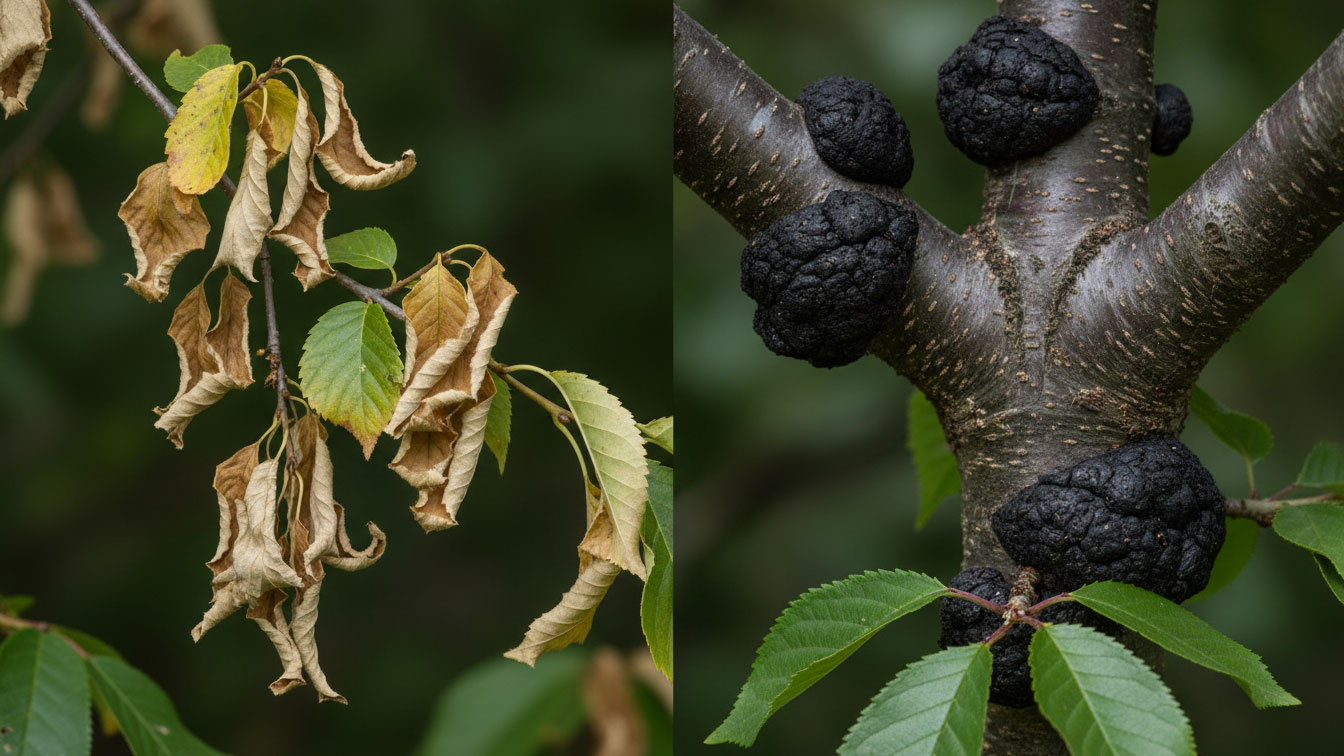
Early symptoms usually show up in mid to late summer and get worse quickly. Look for wilting leaves that turn yellow, then brown, often starting on single branches before spreading. This wilting, called “flagging,” creates patches of dead brown leaves next to healthy green ones, which is a clear early warning sign.
As the disease gets worse, more branches show symptoms until the whole canopy is affected. Leaves curl and may stay on the branches after they die. If you peel back the bark on affected branches, brown streaks in the wood confirm DED. Healthy wood looks cream-colored or pale yellow.
What Calgary Homeowners Should Know
All types of elm trees in Calgary can get DED, including American elm, Siberian elm and hybrids. The City of Calgary keeps a close watch for DED and has strict rules for elm tree care and removal.
Calgary homeowners must not prune elm trees between April 1 and September 30, as fresh pruning cuts attract beetles that spread disease. Violating this pruning ban can result in significant fines. If you notice suspected DED symptoms, contact the City of Calgary’s Parks department for professional assessment. Early reporting is crucial for containing disease spread.
Infected trees must be removed. Infected trees must be removed quickly and all elm wood must be disposed of using City-approved methods to prevent beetles from breeding. Never keep elm firewood on your property or move it to another location. Elm is a common fungal disease affecting trees in the Prunus family, including Mayday trees, chokecherries and ornamental plums, all popular landscape choices in Calgary.
Identifying Black Knot
The most obvious sign of this disease is hard, black, uneven lumps or galls that wrap around branches and twigs. These knots start as small green bumps in spring and slowly get bigger and darker until they look like rough, black, coal-like growths.
The first signs usually show up on small twigs but can spread to bigger branches over time. Branches with lots of knots may die back past the knot because the fungus blocks water and nutrients.
Disease Progression and Impact
Black Knot develops slowly over the years, with infections spreading through airborne spores released during wet spring weather. While rarely fatal to mature trees, the disease significantly impacts appearance and can weaken branches, making them prone to breakage.
Young trees or those with heavy knots all over may get worse or even die if not treated. The disease also spreads easily between closely spaced trees.A visual inspection, especially in early spring before leaves emerge, allows for early detection when knots are most visible. Pruning infected branches at least 6-8 inches below visible knots removes active infections and helps control disease spread.
Sterilize pruning tools between cuts with a 10% bleach solution or rubbing alcohol to avoid spreading spores. Burn pruned branches if allowed or use the city yard waste collection. Don’t compost infected branches.new infections on valuable trees, though treatment doesn’t cure existing knots. For heavily infected trees or when infections occur on main trunks, removal may be the best option.
Fire Blight
Fire Blight is a harmful bacterial disease that mostly affects trees in the Rosaceae family, like mountain ash, crabapples and ornamental pears, which are common in Calgary neighborhoods.
Recognizing Fire Blight Symptoms
The disease is named for the scorched look of infected tissue. Branch tips wilt quickly, turn brown or black and curl down in a shape like a shepherd’s crook. Leaves on these branches look burnt and stay attached after dying. You might also see ooze on infected stems, especially in warm, humid weather. Cankers, which are sunken, discolored spots, can form on branches and trunks where the infection started.
Blossoms can also get infected, turning brown and shriveling soon after they bloom. This blossom blight is often how the bacteria first enter the tree.
How Fire Blight Spreads
Bacteria overwinter in infected branches and cankers and become active during warm spring weather. Rain, insects, birds and wind spread bacteria to fresh blossoms and new growth. The disease spreads most aggressively during warm, wet spring weather, especially when temperatures exceed 15°C (60°F).
Hail damage, late-spring frosts or other events that create tissue wounds provide additional entry points for infection. ire Blight
Prune infected branches at least 12 inches below where you see symptoms and do this during dry weather. Sterilize your tools between each cut. Make sure you cut into healthy wood, which should look white or pale, not discolored.
Plan your pruning carefully and avoid cutting during active growth or wet weather, since that’s when bacteria spread most easily. The safest time to prune heavily infected trees is late winter or early spring, before new growth starts.
Some varieties of susceptible species show better fire blight resistance than others. When replacing lost trees or planning new plantings, consult local nurseries to select resistant cultivars suited to Calgary’s climate.
Cytospora Canker
Cytospora Canker commonly affects spruce trees throughout Calgary, especially Colorado blue spruce, one of our most popular landscape evergreens. This fungal disease causes significant aesthetic damage and can eventually kill mature trees.
Symptoms of Cytospora Canker
Symptoms usually start on the lower branches, where needles turn brown or purple before falling off. Over several years, the dieback moves up the tree, leaving large bare sections and making the tree look thin.
Close examination of affected branches reveals sunken, discolored areas of bark, the cankers where fungal infection has killed cambial tissue. White resin may ooze from cankers and small black fungal structures often dot the infected bark surface.
Unlike normal needle drop, which happens on older needles inside the tree while branch tips stay healthy, Cytospora causes whole sections of branches to die from the infection point outward.
The fungus enters trees through wounds, insect damage, hail damage or cracks in bark caused by stress. Spores spread through rain splash, insects and contaminated pruning tools. Trees weakened by drought, poor planting conditions or other stressors are most vulnerable.
In Calgary, trees often get stressed by uneven moisture, big temperature swings and dry winter conditions. All of these make trees more likely to get Cytospora.
Managing Cytospora Canker
No cure exists for Cytospora Canker, making prevention crucial. Maintain tree health through proper watering, especially during Calgary’s dry winter periods when evergreens continue losing moisture. Avoid wounding trees during landscape maintenance and protect trunks from lawn mower or string trimmer damage.
Prune dead or infected branches to make the tree look better and cut down on fungus spores. Cut back to healthy wood or remove whole branches at the trunk. Sterilize your tools between cuts and get rid of infected branches properly.
If a tree is badly infected or the disease has spread through the whole canopy, it’s often best to remove it. You might want to replace Colorado blue spruce with a more disease-resistant tree that fits Calgary’s climate.
Leaf Spot Diseases
Many different fungi cause leaf spot diseases on Calgary trees like poplars, maples, oaks and mountain ash. These diseases rarely kill trees, but they can make them look worse and weaken them over time if infections keep happening.
Identifying Leaf Spots
Symptoms depend on the fungus and tree, but usually you’ll see round, uneven or angular spots on leaves. These spots can be brown, black, yellow or red, often with clear edges or rings. As the disease gets worse, spots can get bigger, join together or make whole leaves turn yellow and fall off early.
Some leaf spot diseases produce tiny black dots on the spots, while others cause fuzzy growth. If the infection is severe, trees can lose many leaves by mid to late summer. Sections rarely cause serious harm to healthy, established trees. However, repeated annual infections weaken trees by reducing their ability to photosynthesize and produce food. Defoliated trees use stored energy to produce replacement leaves, gradually depleting resources and reducing overall vigor.
Young trees, newly planted trees and those already stressed by the environment are hit hardest by leaf spot diseases.
Prevention and Control
Many leaf spot pathogens overwinter in fallen infected leaves. Raking and removing leaves beneath infected trees reduces the spore load the following year. Properly composting infected leaves or disposing of them through municipal yard waste collection helps break the disease cycle.
Prune trees to improve air flow so leaves dry faster after rain or watering. Try to water at the soil level instead of overhead, since wet leaves make it easier for fungi to infect trees.
Fungicides can protect valuable trees, but they need to be used in spring before symptoms show up. For most established trees, it’s easier to accept some leaf spot damage than to keep spraying fungicides every year.
Powdery Mildew
Powdery mildew diseases affect many Calgary trees, especially ash, lilac, crabapple and some maple varieties. This common fungal disease creates a distinctive white, powdery coating on leaves and young shoots.
Recognizing Powdery Mildew
UnliUnlike most fungal diseases that thrive in wet conditions, powdery mildew prefers dry conditions with high humidity, common during Calgary summers. The characteristic white or gray powdery growth covers leaf surfaces, shoots and sometimes flowers. Affected leaves may curl, distort or become stunted. Severe infections can cause yellowing and premature leaf drop. Young expanding foliage is most susceptible to infection.
Disease Management
Powdery mildew rarely threatens tree survival but affects appearance and can weaken young or stressed trees. Many trees grow out of heavy infections as the season progresses and conditions change.
Prune trees to improve air flow and lower humidity around the leaves. Water trees during dry spells, since stressed trees are more likely to get infected.
Choose resistant varieties when planting new trees to avoid ongoing mildew problems. Many popular trees now have types bred to resist powdery mildew.
Tar Spot is a common fungus that mostly affects maple trees in Calgary. Its symptoms can worry homeowners, but the disease usually has little impact.
Identifying Tar Spot
This aptly named disease produces raised, black spots resembling drops of tar splattered across leaf surfaces. Spots start small and greenish-yellow in early summer, enlarging and darkening until they become prominent black patches by late summer.
Heavily infected leaves with lots of tar spots can look bad, but the disease only affects leaves, not twigs, branches or the tree’s overall health.t
Tar Spot is mostly a cosmetic problem, not a serious health risk. It doesn’t really hurt the tree’s health or lifespan, though trees with lots of spots may lose some leaves early in the fall.
The fungus survives winter in fallen leaves, so picking up and getting rid of leaves in the fall helps reduce infections next year. Fungicides aren’t usually needed for this disease.
Trees handle Tar Spot with little trouble, so trying to control it isn’t worth the cost or effort.
When to Call a Professional Arborist
While careful homeowners can spot many disease symptoms, sometimes you need a professional’s help. Call a certified arborist if you see sudden branch death, fast-spreading symptoms or if several trees are affected. This is especially important when tree disease rules apply, like with Dutch Elm Disease. Arborists have the training and tools to tell diseases apart, find rare problems and suggest the right treatments.
For valuable or irreplaceable trees or when early action can make a difference, getting a professional assessment and treatment plan gives you the best chance to keep your trees healthy.
Preventing Tree Diseases in Calgary
You can’t get rid of all disease risks, but there are several ways to lower the chances of tree problems on your property.
Proper Tree Selection
Pick disease-resistant trees when planting and choose types that fit Calgary’s climate and your yard. Trees under stress are more likely to get sick.
Plant a mix of tree species instead of lots of the same kind. This way, one disease can’t wipe out your whole yard and you’ll have a healthier, more resilient landscape.
Cultural Practices
Keep your trees healthy by watering them properly, especially when they’re young or during dry spells. Calgary’s dry climate means trees often need extra water, even if your lawn looks fine. Mulch around trees to keep soil temperature steady, hold in moisture and protect bark from damage. Keep mulch a few inches away from the trunk to avoid moisture buildup that can cause disease. Be careful with lawn mowers, trimmers and other equipment, since they can injure trees and let diseases in.
Monitoring and Early Intervention
Check your trees regularly for signs of disease, especially during spring growth and after bad weather. Catching problems early lets you act before things get worse or spread to other trees.
Prune dead or diseased branches right away and always sterilize your tools to stop disease from spreading. Make sure you prune at the right time and follow rules like Calgary’s elm pruning ban to avoid making trees more vulnerable.
Conclusion
Understanding common tree diseases. Knowing about common tree diseases in Calgary helps you protect your valuable trees by spotting problems early and responding appropriately. Some diseases require prompt action from a professional, but others cause only cosmetic damage that healthy trees can handle. Prevention lies in proper species selection, maintaining tree health and vigor and regular monitoring for early symptoms. When disease problems develop, accurate identification and timely intervention, whether through your own efforts or with professional arborist assistance, provides the best outcomes.
Calgary’s trees face special challenges from our climate, but with the right care, your trees can thrive for many years and add beauty, shade and value to your property. If you’re ever unsure about tree disease symptoms, reach out to a local certified arborist who knows Calgary’s conditions and can give you expert advice for your trees.
Need Professional Tree Services?
Our certified arborists are ready to help with professional tree services in Calgary.
Get Your Free Quote