Back to Blog
What’s Actually Left Underground After Stump Grinding and Should You Be Worried?
You’ve had the tree removed. The stump grinder came through, did its work and now there’s a tidy pile of wood chips where that old stump used to be. The yard looks better. The job feels done.
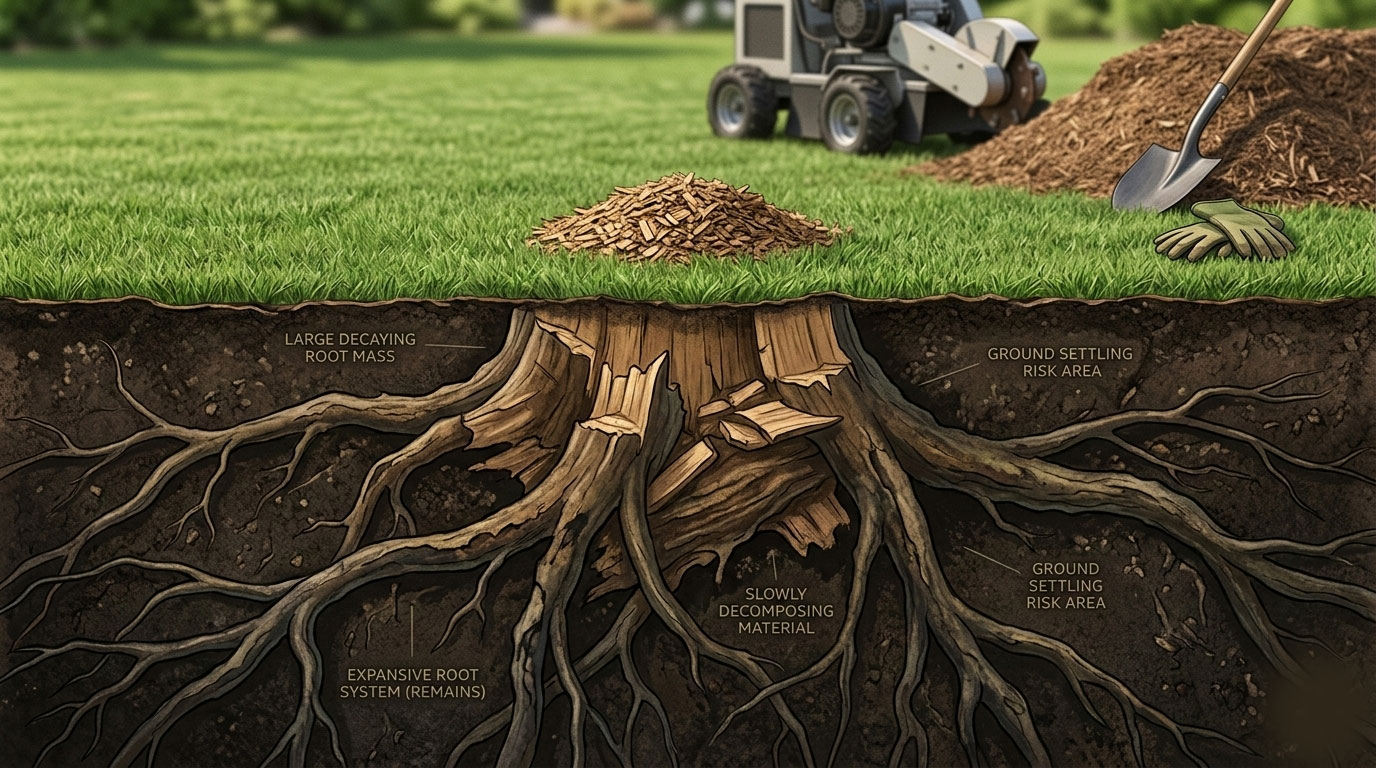
But here’s the thing most people don’t think about until later: stump grinding doesn’t actually remove everything. Beneath that fresh layer of sawdust, there’s still a significant amount of tree left in the ground. Roots, decaying wood and a compressed mass of organic material that could extend far wider and deeper than most homeowners realize.
Is that a problem? Sometimes. Sometimes not at all. The answer depends on what’s down there, how big the original tree was and what you’re planning to do with that space going forward.
Let’s get into the details.
What Stump Grinding Actually Does
First, it helps to understand what the process actually accomplishes. A stump grinder is essentially a large rotating cutting wheel with carbide teeth. It grinds the stump down in passes, working from the top of the stump downward and outward until the visible wood is gone.
Most professional grinders will take a stump down to somewhere between six and twelve inches below the soil surface. Some will go deeper if requested or if the situation warrants it. What you’re left with in the hole is a mix of wood chips, soil and shredded wood fiber the byproduct of all that grinding. That material gets raked back into the hole or hauled away, depending on your preference.
What doesn’t get removed is everything below the grind depth. The taproot of the tree had one. The lateral roots spread outward in every direction. The lower portion of the root ball. All of that stays exactly where it is, underground, and will remain there for years while it very slowly decomposes.
On a large mature tree, that’s a substantial amount of material. The root system of a 60-foot oak or elm doesn’t conveniently stop at the drip line of the canopy. Those roots can extend outward two to three times the radius of the canopy and in some species, much further. The majority of that root mass lies in the top 2 feet of soil, but some roots can go much deeper, depending on soil conditions and species.
How Long Do the Roots Take to Decompose?
This is where people are often surprised. The timeline for underground root decomposition is much longer than most homeowners expect.
Small roots, the fine feeder roots and smaller laterals will break down relatively quickly. In good soil conditions with adequate moisture and microbial activity, you might see small roots fully decomposed within two to five years.
The larger structural roots are a different story. A thick lateral root that was four or five inches in diameter can take a decade or more to fully break down. The taproot of a large tree can persist even longer than that. The exact timeline depends on the species, soil conditions, moisture levels and the activity of the fungi and bacteria responsible for decomposition. Hardwoods like oak and elm tend to decompose more slowly than softwoods like poplar or cottonwood.
During that decomposition process, the roots shrink and collapse inward as the wood fiber breaks down. This is relevant because it means the ground above those roots can settle and shift over time, resulting in noticeable surface changes.
The Sinkhole Problem Nobody Warns You About
One of the most common complaints homeowners have after stump grinding is ground settling in the area where the tree was removed. You fill in the hole, lay down some fresh topsoil, seed it with grass and everything looks great. Then two or three years later, a soft spot appears. Maybe a slight depression. In some cases, a more pronounced sinkhole appears in the lawn.
This happens because the roots underground are slowly decomposing and leaving voids in the soil. As the wood breaks down, the soil above it loses its support structure and settles downward. It’s not dangerous in most cases, but it is annoying and it can be persistent, requiring repeated top-dressing and reseeding over several years until the decomposition process runs its course.
The larger the tree, the more significant this settling can be. A massive old tree with a wide root system can cause minor ground movement across a surprisingly large area of the yard.
If you’re planning to install anything permanent over the former root zone, a deck, a patio, a garden bed with rigid edging or a driveway extension, it’s worth having a conversation with a landscaper or contractor about how long they’d recommend waiting before installing any hardscape in that area. Rushing into paving over a decomposing root mass is a reliable way to end up with cracked concrete a few years down the road.
Can Roots Cause Damage After the Tree Is Gone?
This question comes up a lot and the answer is more nuanced than a simple yes or no.
Living roots can cause damage. Dead roots generally don’t. Once a tree is removed, the roots lose their energy source. They can no longer grow. They can no longer exert pressure in new directions. Any damage they caused while the tree was alive to foundations, pipes, sidewalks or driveways stops progressing. The roots begin to decay and shrink rather than expand.
So if you’ve been told that your tree’s roots were pushing against your foundation or cracking the sidewalk out front, the good news is that removing the tree stops the problem from getting worse. The roots that are already in contact with those structures will gradually shrink and pull away as they decompose.
There is one exception worth knowing about. Some tree species can produce new growth from their root systems even after the trunk has been removed and the stump has been ground. This is called suckering or coppicing and it’s more common in certain species than others. Aspens are the classic example in Alberta — they spread through connected root systems and removing one stem doesn’t kill the root network. You can grind the stump and be back out in a few months, pulling new sprouts that have emerged from the surviving root mass.
Other species known to sucker after removal include Manitoba maple, Siberian elm and some species of cottonwood. If your tree falls into one of these categories, it’s worth discussing herbicide treatment options with your arborist at the time of removal to suppress regrowth from the roots.
What About Pipes and Underground Infrastructure?
If you’re worried about roots that have already made their way into drain lines or sewer pipes, stump grinding alone isn’t going to resolve that. The sections of root inside the pipes remain in place and will continue to block or slow drainage until they’re addressed directly, typically through hydro jetting, root cutting or pipe replacement, depending on how severe the intrusion is.
After the tree is removed, those roots in the pipes will eventually die and begin to decompose, but the process is slow and in the meantime, the blockage remains. If you’ve been experiencing drainage issues you suspect are root related, talk to a plumber about getting the lines scoped and cleared as part of the overall process, rather than assuming removal will automatically fix it.
Should You Ask for a Deeper Grind?
Standard grinding depth is sufficient for most applications. If you’re just trying to remove the visual presence of the stump and plan to lay lawn over the area, going six to ten inches below grade does the job. The roots left behind will decay on their own timeline without causing any significant issues in most situations.
But there are circumstances where asking for a deeper grind makes sense:
Replanting in the same spot. If you want to plant a new tree or large shrub in the same location, a deeper grind gives the new root system more room to establish without competing with the decaying remnants of the old one.
Installing underground infrastructure. If you’re planning irrigation, drainage or electrical work in the area, knowing exactly what’s down there and clearing as much as possible first saves headaches later.
Certain species are prone to suckering. Going deeper into the stump reduces the energy reserve available for root sprouting, though, as mentioned, it doesn’t fully eliminate the possibility in aggressive species.
A deeper grind takes more time and costs more, but in the right circumstances, it’s worth the additional investment. Ask your arborist for their recommendation based on your specific plans for the space.
What Should You Do with the Hole?
Once the grinding is done, you’ll have a hole filled with a mixture of wood chips and soil. A few options depending on what you’re planning:
If you’re just seeding the area with grass, most of that chip and soil mix can stay in place. Add a layer of quality topsoil, seed it and plan to top-dress the area again in a year or two as settling occurs.
If you’re replanting, remove as much of the chip and wood debris as possible and replace it with good-quality topsoil or a blend suited to the plant you’re installing. Wood chips, as they decompose, can temporarily tie up nitrogen in the soil, which isn’t ideal for establishing new plantings.
If you’re hardscaping the area, remove all debris and bring in compacted fill before laying any base material. Don’t skip the compacted fill step; it’s what prevents the settling problem from showing up in your patio surface three years from now.
The Bottom Line
Stump grinding does exactly what it says: it grinds the stump. What it doesn’t do is remove the root system. Everything below the grind depth stays in the ground and decomposes over a timeline that can range from a few years for small roots to more than a decade for large structural ones.
In the vast majority of cases, this isn’t something to lose sleep over. The roots stop growing, they slowly break down and the main thing you’ll notice is some minor ground settling that needs occasional top-dressing. Plan for that and you won’t be caught off guard.
Where it becomes more important to think carefully is when you’re planning new construction, replanting or dealing with a species that’s known to regenerate from its roots. In those situations, a conversation with your arborist before the grinder arrives is time well spent.
The tree is gone. What it left behind will take care of itself; you just need to know what to expect.
Need Professional Tree Services?
Our certified arborists are ready to help with professional tree services in Calgary.
Get Your Free Quote